
 EN
EN

Top Attractions in Istanbul
Top Attractions in Istanbul
There are so many incredible places to visit in Istanbul that it's impossible to explore them all in just one trip. As Turkey's most fascinating city, Istanbul is a unique destination where rich history, traditional culture, and modern architecture come together in perfect harmony. Every year, millions of travelers from around the world visit this remarkable city to experience its timeless charm.
Istanbul's attractions are spread across its European and Asian sides, making it the only city in the world that spans two continents. Half of the city lies in Europe, while the other half is located in Asia. Throughout its long and remarkable history, Istanbul has served as the capital of several great empires, leaving behind an extraordinary collection of historical landmarks, magnificent palaces, impressive mosques, bustling bazaars, and cultural treasures.
Join us as we explore the most famous and must-see attractions in Istanbul and discover why this magnificent city continues to captivate visitors from every corner of the globe.
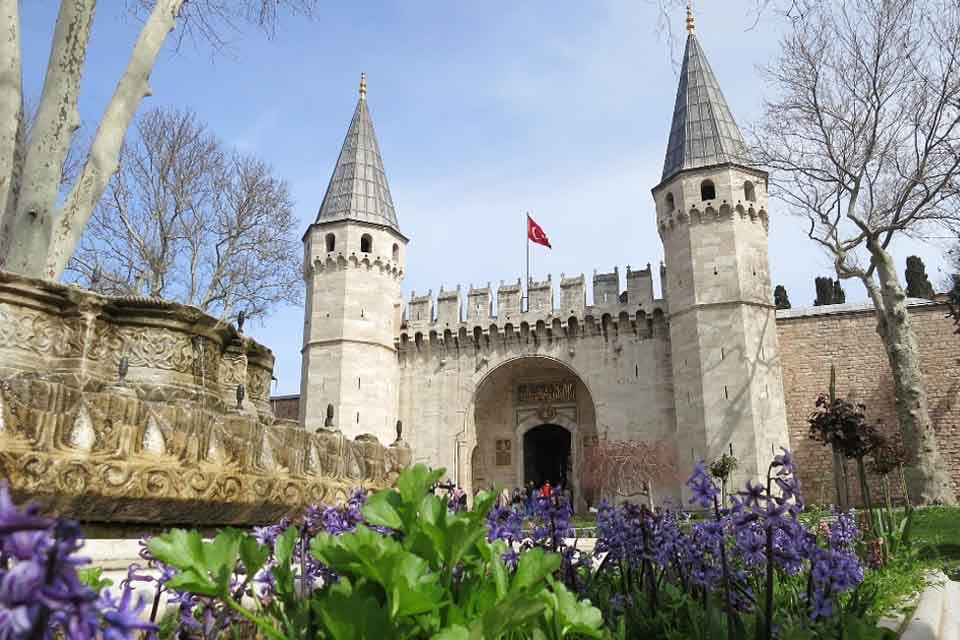
1. Topkapi Palace, Istanbul (Topkapı Palace)
Located in the historic heart of Istanbul, Topkapi Palace is one of the city's most magnificent landmarks and a symbol of the grandeur of the Ottoman Empire. The palace is situated in the Sultanahmet neighborhood of the Fatih district, near Eminönü, on the European side of Istanbul. During the Byzantine era, this area served as the political center of the Eastern Roman (Byzantine) Empire. Perched on one of the highest points of the historic peninsula, Topkapi Palace overlooks the Sea of Marmara, the Golden Horn, and the Bosphorus, offering spectacular panoramic views.
Many of Istanbul's most famous attractions are within walking distance of the palace, including the Hagia Sophia, the Blue Mosque (Sultan Ahmed Mosque), and the Basilica Cistern, making it an essential stop on any itinerary. Remarkably, nearly thirty Ottoman sultans ruled the empire from this palace during the Ottoman Empire's 600-year history.
Following the conquest of Constantinople, Sultan Mehmed II ordered the construction of Topkapi Palace, which was completed in 1478 and became the official residence of the Ottoman sultans. Over the following centuries, successive rulers expanded the complex by adding new buildings and architectural features, creating the magnificent palace visitors see today. At its peak, the palace was home to approximately 4,000 residents, including nearly 300 members of the Imperial Harem.
Topkapi Palace contains hundreds of rooms, grand halls, courtyards, and passageways. One of its most extraordinary sections is the Imperial Harem, an architectural masterpiece comprising more than 400 rooms, along with its own hospital, school, baths, and living quarters, each beautifully decorated in the finest Ottoman style. The Imperial Council Chamber and the Audience Hall witnessed many of the empire's most important political events, while the Imperial Treasury houses priceless jewels, royal artifacts, and ceremonial objects. During your visit, don't miss the palace's four magnificent courtyards, the Royal Collections, and the breathtaking views overlooking Istanbul's waterways, all of which make Topkapi Palace one of the city's most unforgettable attractions.
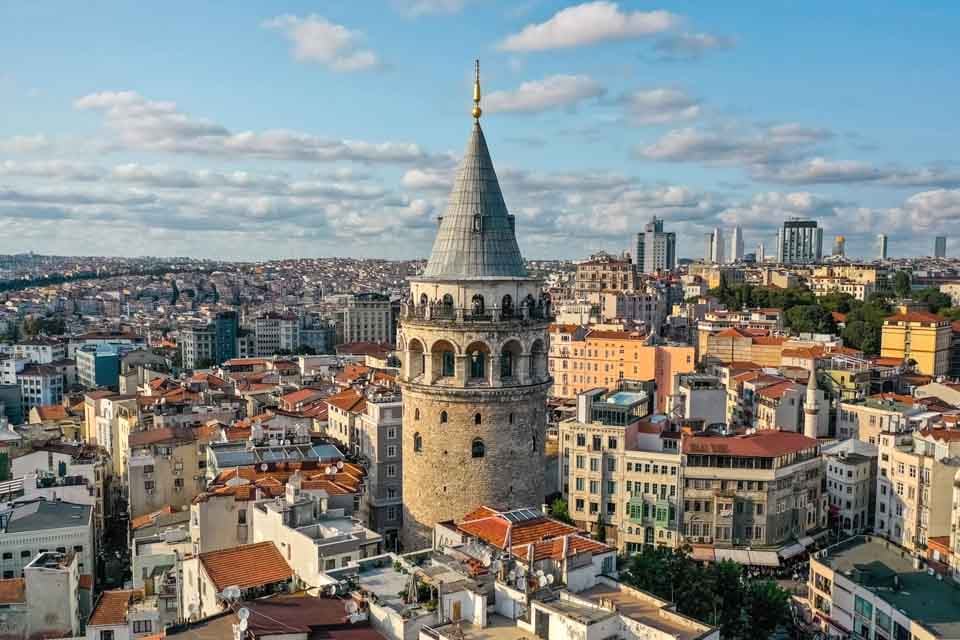
2. Galata Tower, Istanbul (Galata Tower)
One of Istanbul's most fascinating landmarks is the Galata Tower. Built in 1348 AD, the tower was originally constructed to monitor maritime traffic and detect enemy ships approaching the city. It was later used as a prison.
Standing 67 meters (220 feet) tall, Galata Tower is one of Istanbul's most iconic landmarks and a symbol of the city that spans both Europe and Asia. From the top of the tower, visitors can enjoy breathtaking panoramic views of Istanbul and many of its famous attractions. If you visit around sunset, you'll be treated to a spectacular and unforgettable view as the sun sets over the city.
At the top of the tower, there is a spacious restaurant where visitors can enjoy some of the finest traditional Turkish cuisine, making it well worth a visit. In 1749, Galata Tower was the tallest building in Istanbul.
Inside the tower, a beautiful spiral staircase leads to the upper levels, offering an exciting experience for visitors. For those who prefer not to climb the stairs, two elevators provide easy access to the observation deck.
Watching the sunset from the top of Galata Tower while listening to the sound of seagulls is one of the most memorable experiences you can have in Istanbul.
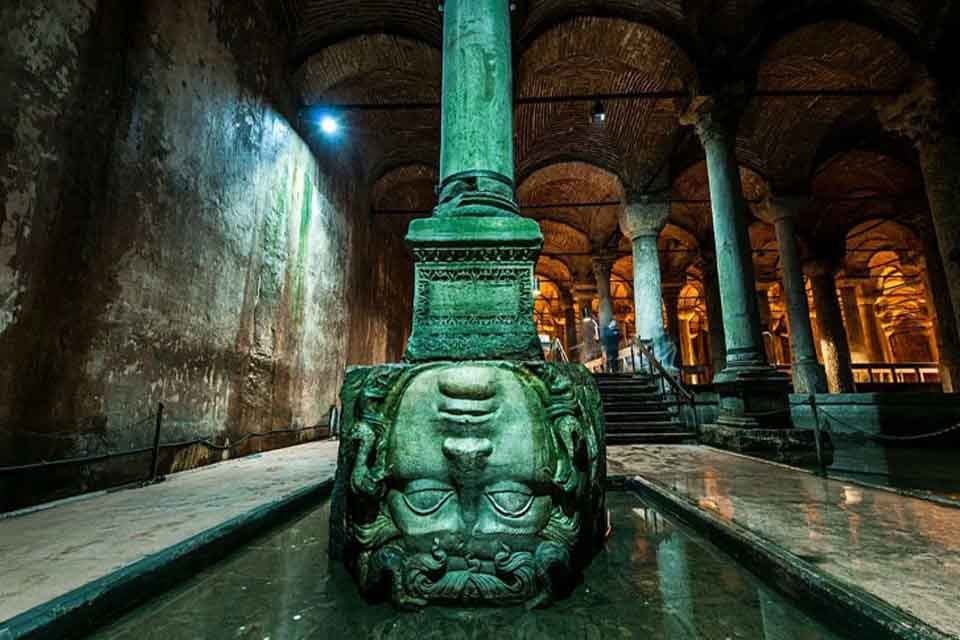
3. Basilica Cistern, Istanbul (Basilica Cistern)
Another of Istanbul's remarkable attractions is the Basilica Cistern. It may seem surprising that an ancient underground water reservoir is considered one of the city's top tourist attractions, but the Basilica Cistern is famous for its extraordinary architecture and attracts millions of visitors from around the world each year.
The Basilica Cistern was built in the 6th century by order of the Byzantine Emperor Justinian I and served as one of Constantinople's main water reservoirs. It has a storage capacity of approximately 2.8 million cubic feet of water. To enter the cistern, visitors descend 52 steps into the underground chamber, where they are greeted by an enormous structure measuring 140 meters long and 70 meters wide, supported by 336 marble columns, each standing 9 meters high. Its magnificent design is so impressive that it was featured in a scene from a James Bond film.
The Basilica Cistern is considered one of the greatest engineering achievements of its time and remains one of Istanbul's most fascinating historical landmarks. Its name comes from a large basilica that once stood on this site. Locally, it is known as Yerebatan Sarnıcı, meaning "the Sunken Cistern," a name inspired by the forest of marble columns rising from the water below. Its mysterious atmosphere transports visitors deep into the ancient history of Istanbul.
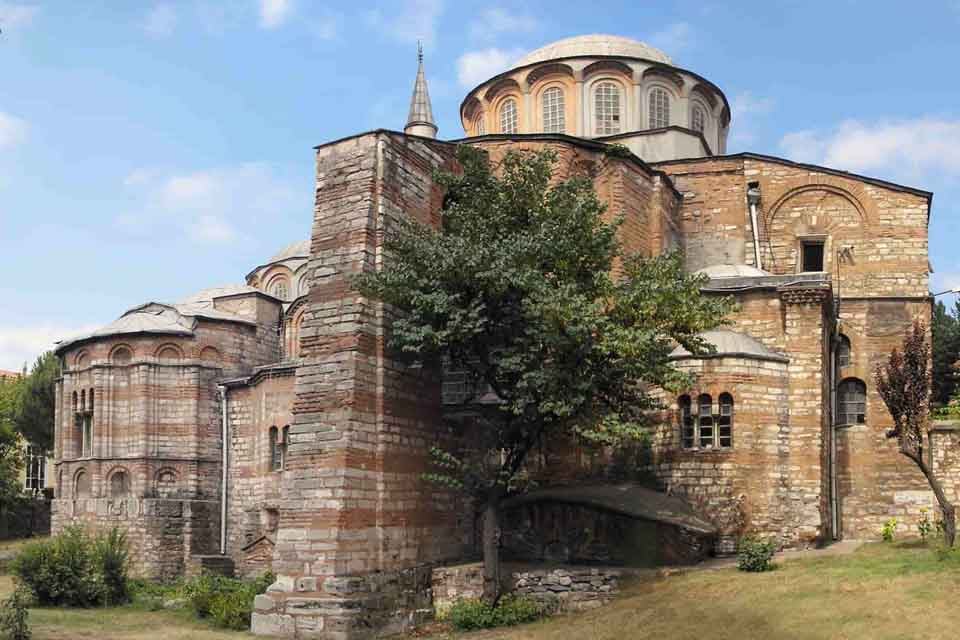
4. Chora Church, Istanbul (Chora Church)
Chora Church is one of Istanbul's most important historical attractions. This remarkable monument has undergone a fascinating transformation throughout its history. It was originally built as a Byzantine church, later converted into a mosque, and today it is open to visitors as a museum.
The church is considered one of Istanbul's must-see attractions because of its unique architecture, exquisite mosaics, and intricate decorative artwork. Its magnificent frescoes depicting the lives of Jesus Christ and the Virgin Mary make it an even more extraordinary place to visit. The church is also admired for its exceptional examples of Byzantine art and architecture.
Located approximately three miles northwest of the Sultanahmet district, Chora Church welcomes visitors who are interested in Turkey's rich history and cultural heritage. Surrounded by beautiful green spaces, the church offers a peaceful and picturesque setting. Anyone with an interest in history, art, or architecture should not miss the opportunity to visit this remarkable landmark.
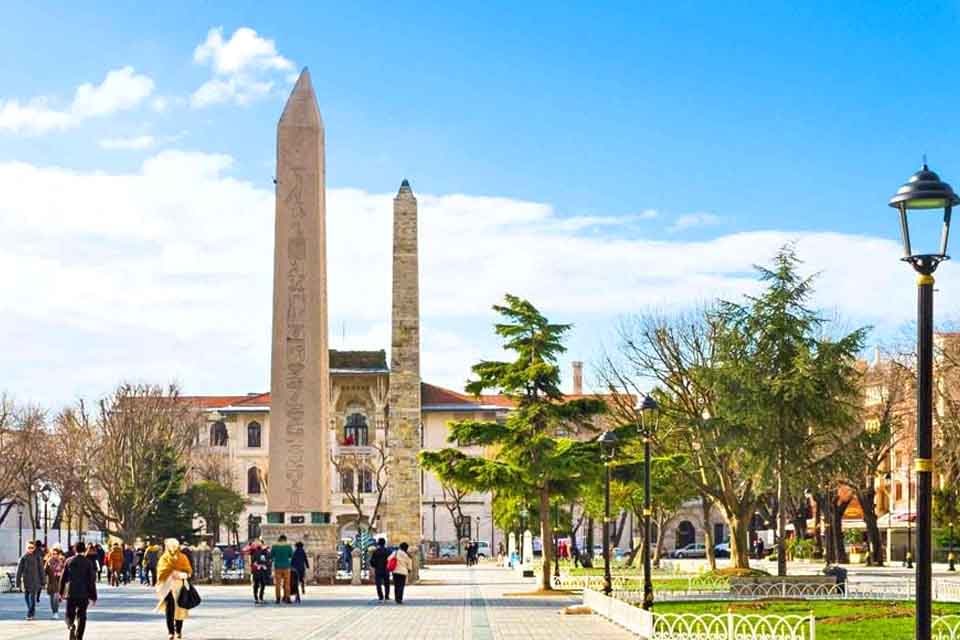
5. Hippodrome of Constantinople (Sultanahmet Square)
One of Istanbul's most fascinating attractions is the Hippodrome of Constantinople, also known as Hippodrome Square. Built during the Roman Empire, it became one of the largest and most important chariot racing arenas in the ancient world. Located in the historic Sultanahmet district—one of the oldest neighborhoods in Istanbul—the square is also commonly referred to as Sultanahmet Square.
In ancient times, the Hippodrome hosted exciting chariot races and horse racing events, which were among the most popular sporting competitions of the era. It also served as the venue for imperial ceremonies, military parades, and coronation celebrations, making it both the sporting and social center of the Byzantine Empire and one of Istanbul's most significant historical landmarks.
At the center of the square stands the Obelisk of Theodosius, one of Istanbul's most remarkable monuments. Carved from pink granite, the obelisk was originally brought from Egypt to Constantinople by order of Emperor Theodosius the Great. The base of the monument features intricate carvings depicting Emperor Theodosius, his wife, his sons, and members of the imperial court watching a chariot race.
Nearby, visitors can also admire the beautiful German Fountain, a gift from German Emperor Kaiser Wilhelm II to Sultan Abdulhamid II as a symbol of friendship between the two nations. Many of Istanbul's most famous attractions—including Hagia Sophia, the Istanbul Archaeological Museums, the Blue Mosque (Sultan Ahmed Mosque), and the Basilica Cistern—are all within walking distance of Hippodrome Square in the historic Fatih district, making it an ideal starting point for exploring the city's rich cultural heritage.
6. Dolmabahçe Palace, Istanbul (Dolmabahçe Palace)
Dolmabahçe Palace is one of Istanbul's most magnificent attractions, located in the Beşiktaş district on the European side of the city. This stunning palace stands on the eastern shore of the Bosphorus, next to Kabataş Harbor. Beşiktaş is one of Istanbul's most popular tourist districts, surrounded by numerous historical and cultural landmarks.
The name Dolmabahçe comes from two Turkish words: dolma, meaning "filled" or "filled in," and bahçe, meaning "garden." The site where the palace now stands was once a small natural bay. During the 17th century, this harbor was used for traditional naval ceremonies and celebrations commemorating the Ottoman conquest of Istanbul. Over time, the area became a favorite leisure retreat for the Ottoman sultans.
Sultan Ahmed I and Sultan Osman II built numerous pavilions and gardens here as royal retreats. Later, Sultan Abdülmecid I commissioned the construction of Dolmabahçe Palace in the elegant style of European palaces, taking advantage of its spectacular waterfront setting. Dating back to the Ottoman era, the palace is now one of the most popular tourist attractions on Istanbul's European side. Visitors from around the world come to admire its magnificent architecture and capture unforgettable photographs.
Interestingly, Dolmabahçe Palace is the largest palace in Türkiye. It served as the residence of six Ottoman sultans, and Mustafa Kemal Atatürk, the founder of the Republic of Türkiye, spent the final days of his life in one of its rooms.
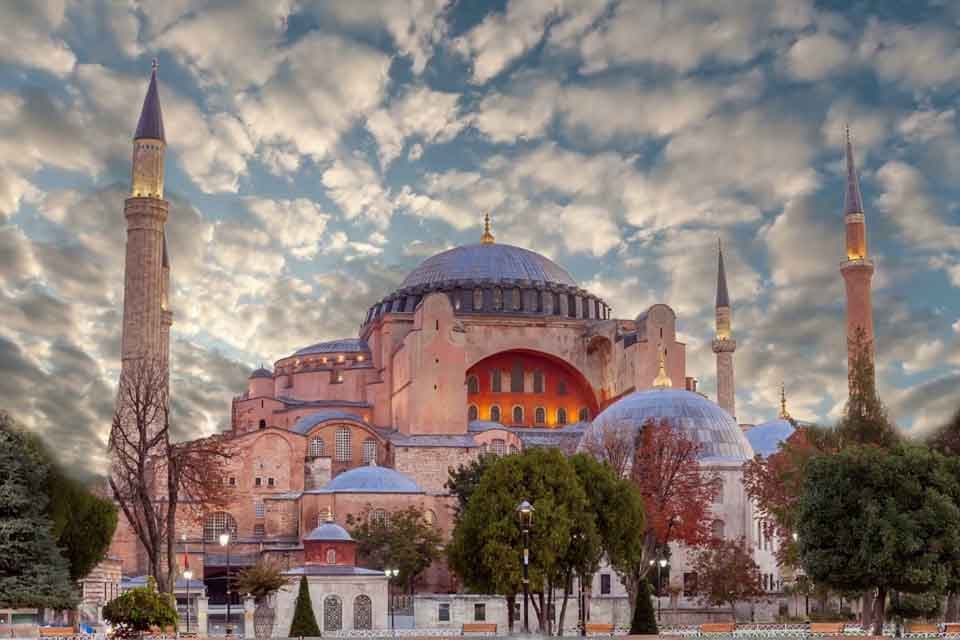
7. Hagia Sophia, Istanbul (Hagia Sophia)
Hagia Sophia is one of Istanbul's most important and iconic landmarks, located in the historic Sultanahmet district. Its magnificent architecture and towering minarets attract millions of visitors from around the world throughout the year.
Situated on the European side of Istanbul in Hagia Sophia Square, the monument is surrounded by hotels, shopping areas, and many of the city's most famous tourist attractions. Just a short walk away stands the Blue Mosque (Sultan Ahmed Mosque), another masterpiece of Ottoman architecture.
Also known as Aya Sofya or Hagia Sophia, the building was originally constructed as a Christian church during the Byzantine Empire. It was built in 532 AD by order of Emperor Justinian I and was restored and expanded during the 6th century. The reconstruction was carried out by two renowned architects, Isidore of Miletus and Anthemius of Tralles. Built by a workforce of approximately 10,000 laborers under the supervision of one hundred master craftsmen, the project was completed in just five years and officially inaugurated on December 27, 537 AD. The building was originally known as the Great Church before being converted into a mosque following the Ottoman conquest of Constantinople by Sultan Mehmed II.
During the reign of Suleiman the Magnificent, many of the church's Christian paintings and mosaics were covered so that Friday prayers could be held inside the building.
Later, Sultan Selim II commissioned the celebrated architect Mimar Sinan to restore and strengthen Hagia Sophia. During the reign of Sultan Murad III, the mosque's minarets, mihrab, and minbar were added, further enhancing its grandeur.
Byzantine architecture remained strongly influenced by early Christianity until the 6th century. During the reign of Emperor Justinian I, it reached its artistic and architectural peak. Thanks to his generous patronage of the arts, numerous magnificent monuments were created, reflecting the power and glory of the Byzantine Empire. Historians often refer to this period as the First Golden Age of Byzantine Art, and Hagia Sophia stands as its greatest architectural masterpiece.
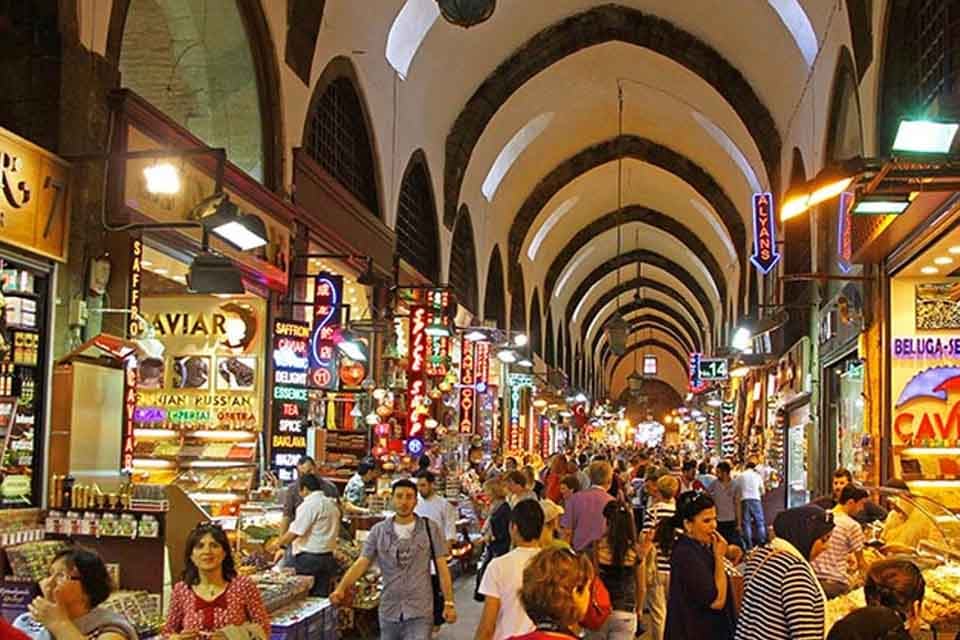
8. Spice Bazaar, Istanbul (Spice Bazaar)
Spices have always been an essential part of Iranian cuisine, and they play an equally important role in Turkish and Middle Eastern cooking. In Istanbul, the Spice Bazaar, also known as the Egyptian Bazaar, has long been one of the city's most popular tourist attractions. It is the second most famous covered market in Istanbul after the Grand Bazaar.
For centuries, the Spice Bazaar served as the center of the spice trade in Istanbul. In recent years, however, its offerings have expanded to include a wide variety of products such as dried fruits, dried vegetables, nuts, Turkish delights, teas, and other traditional delicacies. Today, it is a favorite destination for visitors who enjoy authentic Turkish cuisine and the rich aromas and flavors of fresh spices.
The Spice Bazaar is home to 88 shops. The building was designed by Koca Kasım Ağa, while its architecture was completed by Mustafa Ağa.
The bazaar forms part of the larger New Mosque (Yeni Mosque) complex. It was completed in 1660, while the mosque complex itself was finished between 1660 and 1665 under the patronage of Turhan Hatice Sultan, the mother of Sultan Mehmed IV.
The Spice Bazaar was established as a charitable endowment for the New Mosque, and the rental income from its shops has traditionally been used to cover the mosque's maintenance and operating expenses. Originally known as the New Bazaar, it was later renamed the Egyptian Bazaar because it was financed with tax revenues collected from the Ottoman province of Egypt.
Interestingly, the Turkish word "Mısır" has two meanings: Egypt and corn. As a result, some people have mistakenly referred to the Spice Bazaar as the Corn Bazaar, although its correct historical name refers to Egypt.
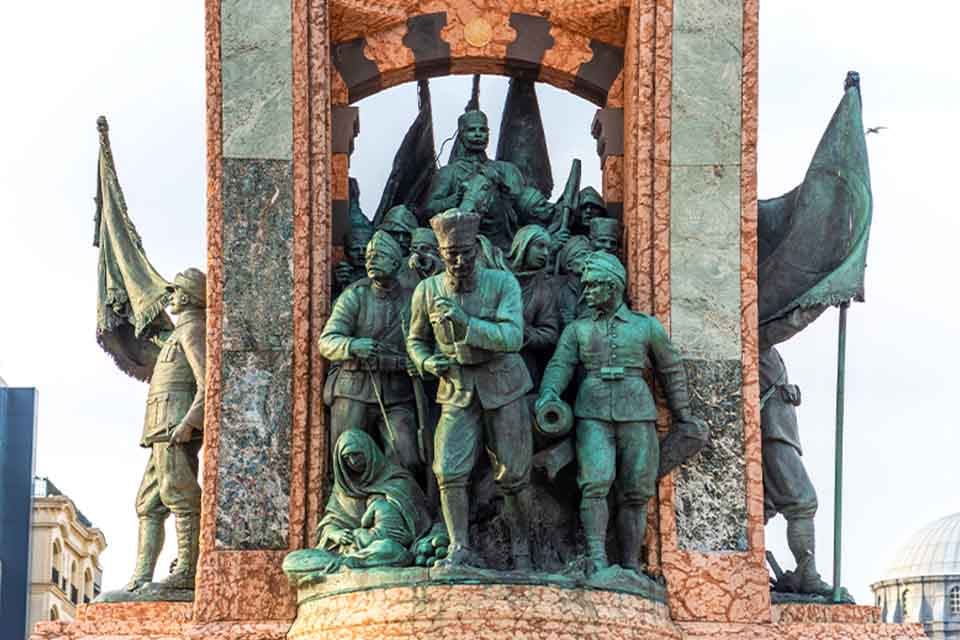
9. Taksim Square and Istiklal Avenue, Istanbul
Taksim Square is one of Istanbul's most famous landmarks and one of its most visited tourist attractions. Its history dates back to the reign of Sultan Mahmud I, when a network of water distribution channels was built in the area to supply water throughout the city. Because of this system, the square became known as "Taksim," which means "distribution" in Turkish. Today, it is one of the most important and recognizable attractions in Istanbul.
Taksim Square leads directly to the famous Istiklal Avenue, which is widely regarded as the city's most vibrant and popular tourist district. The square is surrounded by shopping centers, historical landmarks, hotels, restaurants, and numerous attractions, making it an ideal starting point for exploring Istanbul.
One of the highlights of Taksim Square is the Republic Monument, located at its center. This famous monument was erected in 1928 and commemorates Mustafa Kemal Atatürk, the founder of the Republic of Türkiye. It is one of the country's most important national monuments and holds great significance for the Turkish people.
On both sides of the monument stand statues of soldiers holding the Turkish flag, enhancing its impressive appearance. Created by the renowned Italian sculptor Pietro Canonica, the Republic Monument symbolizes the liberation and independence of Türkiye. Today, it is recognized as one of Istanbul's iconic landmarks, attracting thousands of visitors each year who stop to admire the monument and take memorable photographs.
The Atatürk Cultural Center (AKM) is also located near Taksim Square. This modern cultural venue hosts concerts, theatrical performances, operas, festivals, and various artistic events throughout the year. Many visitors come to enjoy traditional Turkish music, opera performances, and other cultural productions. Its opera halls are among the finest venues in the city for music lovers.
Istiklal Avenue
In addition to Taksim Square, Istiklal Avenue is one of Istanbul's most lively and exciting destinations. This historic pedestrian street is bustling with activity throughout the day and well into the night. The evenings on Istiklal Avenue are especially vibrant, making it an ideal place for shopping, entertainment, sightseeing, and experiencing the city's energetic atmosphere.
The avenue is lined with cafés, restaurants, boutiques, shopping malls, and entertainment venues serving Turkish, Iranian, and European cuisine. It is also home to numerous clubs and shops catering to every taste.
The lively atmosphere of Istiklal Avenue is enhanced by street musicians, live performances, and local entertainers who create an unforgettable experience for visitors. You can also sample delicious local snacks sold by street vendors along the avenue. If you enjoy vibrant city life, shopping, music, and entertainment, you will undoubtedly love visiting Taksim Square and Istiklal Avenue.
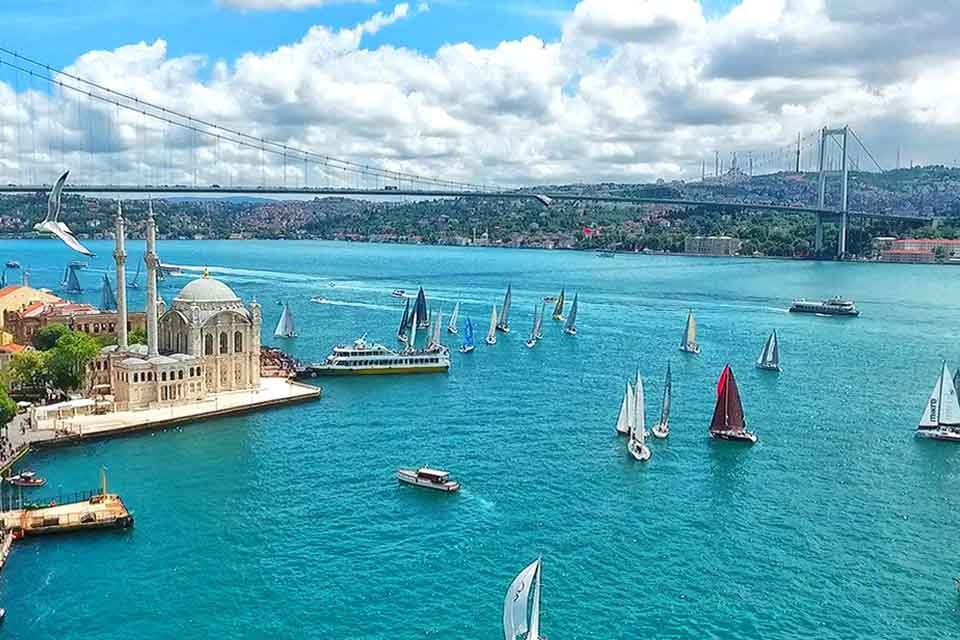
10. Bosphorus Strait, Istanbul
Many people associate Istanbul with the Bosphorus Strait. Also known as the Strait of Istanbul, the Bosphorus is a narrow natural waterway and one of the world's most important international shipping routes, located in northwestern Türkiye. This magnificent strait forms the boundary between the continents of Europe and Asia and connects the Black Sea to the Sea of Marmara, making it one of Istanbul's most iconic attractions.
The Bosphorus is often regarded as the world's narrowest navigable strait. Today, much of its shoreline is densely populated, with nearly 17 million people living on both sides. Stretching approximately 32 kilometers, the Bosphorus runs through the heart of Istanbul, linking the city's European and Asian sides.
One of the most popular tourist activities on the Bosphorus is taking a sightseeing cruise. These pleasure boats offer visitors and locals the opportunity to explore this unique geographical and cultural waterway while enjoying live entertainment and unforgettable experiences on board.
From a Bosphorus cruise, you can admire breathtaking panoramic views of Istanbul's most famous landmarks while sailing between two continents. The Bosphorus is especially beautiful at sunrise and sunset, when its spectacular scenery creates one of the most unforgettable experiences in Istanbul.
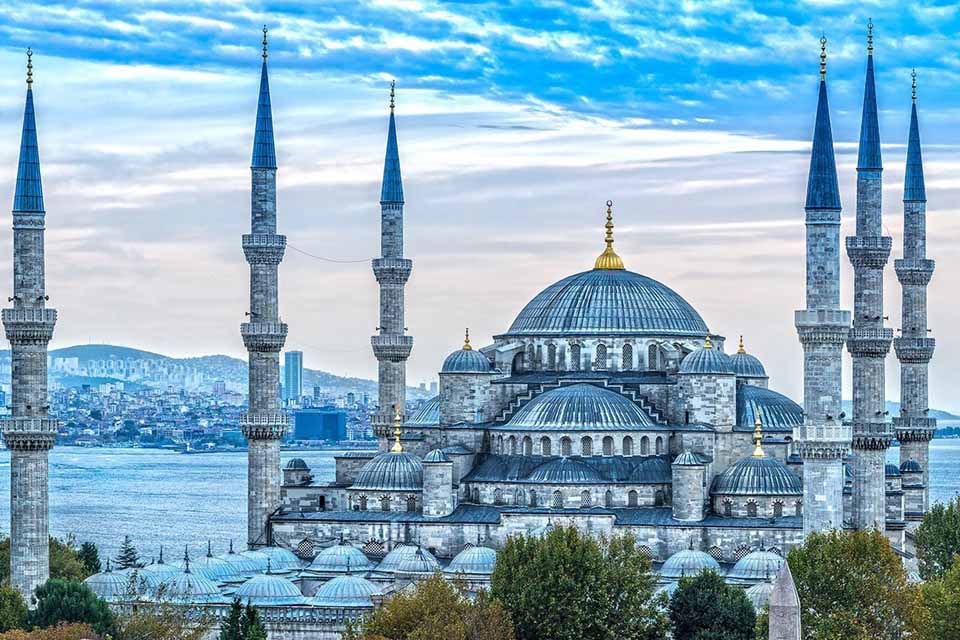
11. Sultan Ahmed Mosque (Blue Mosque), Istanbul
The Sultan Ahmed Mosque, better known as the Blue Mosque, is one of Istanbul's most famous landmarks and is celebrated for its magnificent Ottoman architecture. The mosque earned the nickname "Blue Mosque" because of the more than 20,000 hand-painted blue İznik tiles that decorate its interior.
There is also a popular local story about the origin of its name. It is said that centuries ago, as sailors approached the Bosphorus, they saw the mosque reflecting the blue waters of the strait, giving it a striking blue appearance from a distance. Today, this view is no longer possible because modern high-rise buildings stand between the Bosphorus and the mosque.
Located in the heart of Istanbul's historic district, directly opposite Hagia Sophia, the Blue Mosque is surrounded by many of the city's most important historical attractions. It is widely regarded as one of the most beautiful mosques in the world and is the first mosque in Turkey to feature six minarets.
Built more than 400 years ago during the reign of Sultan Ahmed I, the mosque stands on the historic peninsula, where the capitals of the Byzantine and Ottoman Empires once flourished. Its breathtaking architecture is considered one of the finest examples of classical Ottoman design.
According to a famous legend, the mosque's six minarets were the result of a misunderstanding. Sultan Ahmed reportedly instructed the architect to build golden minarets (altın in Turkish). However, the architect mistakenly heard altı, meaning six, and constructed six minarets instead. Whether true or not, this story has become one of the mosque's most fascinating legends.
Today, only two mosques in Turkey have six minarets: the Sultan Ahmed Mosque in Istanbul and the Sabancı Central Mosque in Adana.
A visit to the Blue Mosque is an unforgettable experience and should be on every traveler's itinerary when exploring Istanbul.
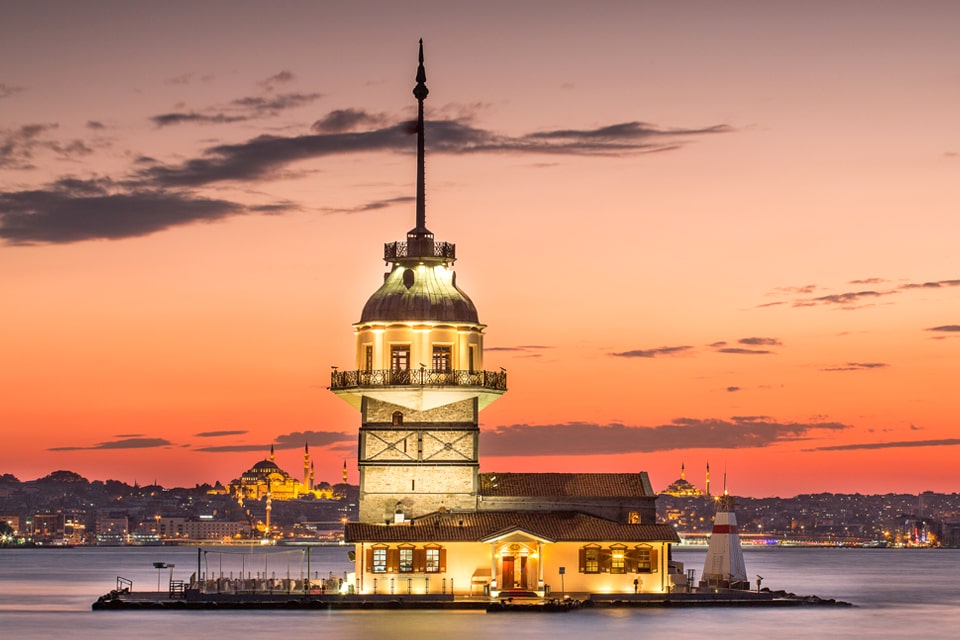
12. Maiden's Tower (Kız Kulesi), Istanbul
The Maiden's Tower (Kız Kulesi) is one of Istanbul's most famous landmarks and a historic symbol of the city. Every year, thousands of visitors come to admire this beautiful monument. The tower is located at the western entrance of the Bosphorus Strait and is also known as the Leander's Tower. Rising about 25 meters above a small rocky islet, it stands between the European and Asian sides of Istanbul, surrounded by the waters of the Sea of Marmara and the Bosphorus. Throughout history, the tower has been associated with many romantic legends and historical events.
The origins of the Maiden's Tower date back to the ancient Greek and Byzantine periods. Over the centuries, it has undergone numerous renovations and served different purposes. Several legends explain the origin of its name. One of the most famous tells the story of a king who imprisoned his beloved daughter in the tower to protect her from a prophecy that she would die in the water. However, despite his efforts, the prophecy came true, and the princess drowned during a storm.
Another well-known legend is the tragic love story of Hero and Leander. According to the legend, Hero lived in the tower to preserve her chastity and avoid unwanted suitors. One day, Leander saw her from across the water and fell deeply in love. Every night, Hero lit a lantern to guide him safely across the sea. During a violent storm, however, the light went out, and Leander lost his way and drowned. The next morning, when Hero found his lifeless body near the tower, she threw herself into the sea in despair.
Over the centuries, the Maiden's Tower has served many different purposes, including as a lighthouse, a watchtower, a customs station, and a signal point for passing ships. Today, it is one of Istanbul's most recognizable cultural and historical landmarks, attracting visitors from around the world. The tower also features a restaurant where guests can relax while enjoying breathtaking views of the Bosphorus.
Overall, the Maiden's Tower is an essential part of Istanbul's rich history and cultural heritage. Together with other iconic landmarks such as the Galata Tower, it offers visitors a memorable glimpse into the city's fascinating past.
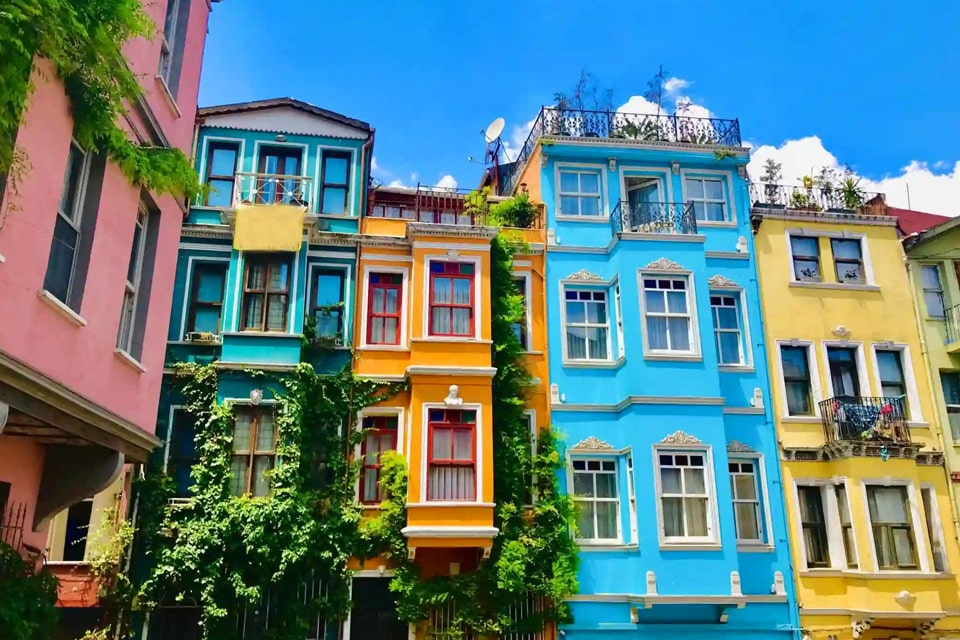
13. Balat Neighborhood, Istanbul
The Balat Neighborhood is one of Istanbul's oldest, most colorful, and most charming districts. Located in the Fatih district on the European side of the city, Balat is one of Istanbul's must-visit attractions for anyone interested in history, culture, and photography.
Situated next to the historic Fener neighborhood along the southern shore of the Golden Horn, Balat was once home to thriving Jewish and Greek communities. Today, its narrow cobblestone streets, brightly painted houses, flower-filled balconies, and cozy cafés create a fairytale-like atmosphere that attracts thousands of visitors from around the world each year.
There are several theories about the origin of the name Balat. One suggests that it comes from the Greek word Palation, meaning "palace." Walking through its colorful streets feels like stepping back in time, where every corner tells a story of Istanbul's rich multicultural past.
The Jewish community of Balat has a remarkable history spanning more than 500 years. In 1492, after the expulsion of Jews from Spain during the Spanish Inquisition, thousands of Sephardic Jews sought refuge in the Ottoman Empire. Sultan Bayezid II welcomed them and is believed to have sent a fleet led by the famous admiral Kemal Reis to help rescue Jewish refugees from Spain. Many of them settled in Balat, bringing new life and cultural diversity to the neighborhood. Later, additional Jewish refugees arrived during the Nazi era to escape persecution in Europe.
Over time, many residents moved to other parts of Istanbul, such as Şişli and Galata, especially after earthquakes damaged the neighborhood. Nevertheless, Balat has preserved its unique historical character and remains one of the city's most fascinating districts.
Balat is part of Istanbul's UNESCO World Heritage area and is home to many important historical landmarks, including the Cibali Gate, which dates back to the Byzantine period, the Gül Mosque, originally built as a Byzantine church, and the impressive Phanar Greek Orthodox College, also known as the Red School, one of the oldest and most prestigious Greek Orthodox educational institutions in the city.
The neighborhood also features several historic churches and the famous Rainbow Stairs, one of Istanbul's most photographed spots. A visit to Balat is a journey through centuries of history, culture, and architectural beauty, making it an unforgettable experience for every traveler.

14. Istanbul Snow Park
Have you ever dreamed of visiting a place that brings back the magic of your childhood? A place that reminds you of waking up to the exciting news that it had snowed overnight, rushing to the window to see the world covered in white before you could believe it. A snow-covered street, a white meadow, or a mountain blanketed in snow—these are the kinds of memories and dreams that many people cherish.
Now imagine experiencing a real winter wonderland in the middle of summer. If you miss the thrill of sledding down snowy hills or building a giant snowman with freezing hands, Istanbul Snow Park offers exactly that. Whether you live in Istanbul or are visiting the city, you can enjoy a fun-filled snowy adventure with your family and friends at any time of the year. Even more remarkably, the park uses real snow, with snow depths of more than 50 centimeters throughout all four seasons, making a wide range of winter activities possible.
Istanbul Snow Park is located in the Torium Shopping Mall in the Esenyurt district. As the city's first indoor snow park, it offers a variety of exciting winter activities, including snow slides, skiing, snowboarding, tubing, snowball fights, and building snowmen. It is an ideal destination for both children and adults looking for a unique and unforgettable experience.
Open all year round, the park allows visitors to enjoy the excitement of winter regardless of the season outside. Whether you are a beginner or an experienced winter sports enthusiast, the ski and snowboard areas provide plenty of entertainment.
Istanbul Snow Park is one of the city's most unique attractions, drawing thousands of visitors every year. If you find yourself in Istanbul during the hot summer months, don't miss the chance to step into a snowy world and enjoy the magic of winter.
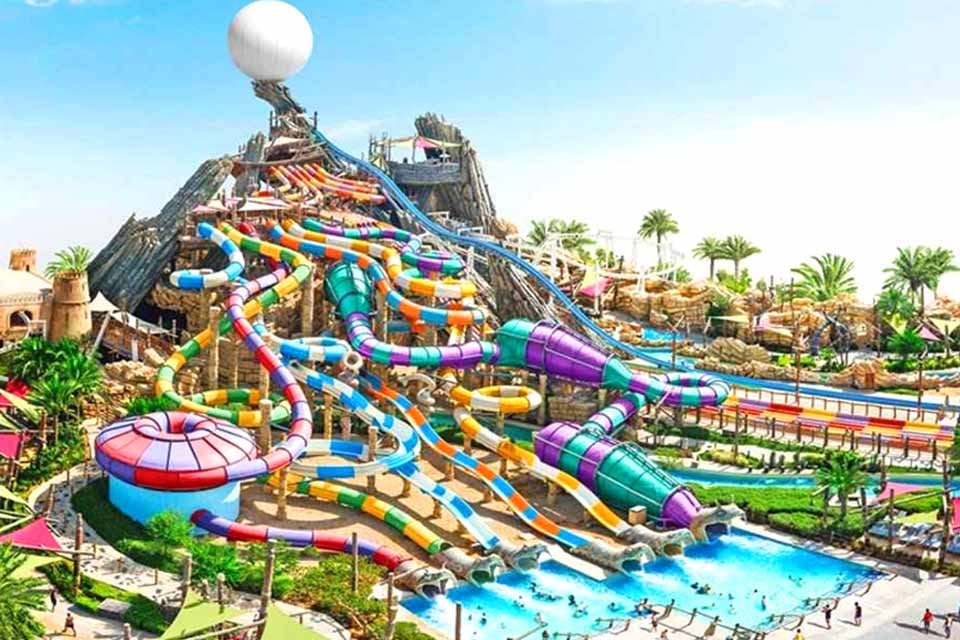
15. Aqua Club Dolphin Water Park, Istanbul
One of Istanbul's most popular attractions during the summer is Aqua Club Dolphin Water Park, one of the city's largest and most exciting water parks. Opened in 2001, the park has expanded continuously over the years. In 2015, it introduced two of its most famous water slides—the King Cobra and the Anaconda—and in 2016, a dedicated children's pool was added, making it even more family-friendly.
Located in the Bahçeşehir district on the western side of Istanbul, Aqua Club Dolphin is typically open from May to September, depending on weather conditions. Every summer, its thrilling slides, spacious pools, and lively atmosphere attract thousands of visitors from around the world.
The park regularly hosts outdoor entertainment events, live concerts, and special performances, creating a fun and energetic atmosphere for guests of all ages. Whether you want to relax with your family, spend time with friends, or simply cool off on a hot summer day, Aqua Club Dolphin offers the perfect setting. Surrounded by lush greenery and beautifully landscaped gardens, it is also an excellent place to capture memorable photos.
Today, Aqua Club Dolphin is recognized as one of the largest water parks in Istanbul. With swimming pools of various sizes, it caters to both professional swimmers and casual visitors. If swimming is not your favorite activity, you can relax by the pools while enjoying live music, entertainment, and dancing.
As an outdoor water park, Aqua Club Dolphin operates only during the warm months of the year. One of its most unique attractions is the opportunity to interact with animals, especially dolphins. Visitors can take photos with them and even enjoy the unforgettable experience of swimming alongside these intelligent marine animals.
The park features 12 exciting water slides, including the King Cobra, Free Fall, Tsunami, Kamikaze, Black Anaconda, Black Hole, and several slides designed especially for children. It also offers four pools for adults, two children's pools, a wave pool, a family pool, and a lagoon-style pool, ensuring entertainment for every age group.
In addition to its water attractions, the park includes a water polo pool, tennis courts, sunbathing areas, an artificial beach, and beach volleyball courts. Visitors can also enjoy live music performances and the park's famous foam parties, which usually last for around three hours and create a festive summer atmosphere.
Aqua Club Dolphin also features well-equipped restaurants, cafés, and shops, providing everything visitors need for a comfortable and enjoyable day. If you are visiting Istanbul during the summer, don't miss the chance to escape the heat and enjoy an unforgettable adventure at Aqua Club Dolphin Water Park.
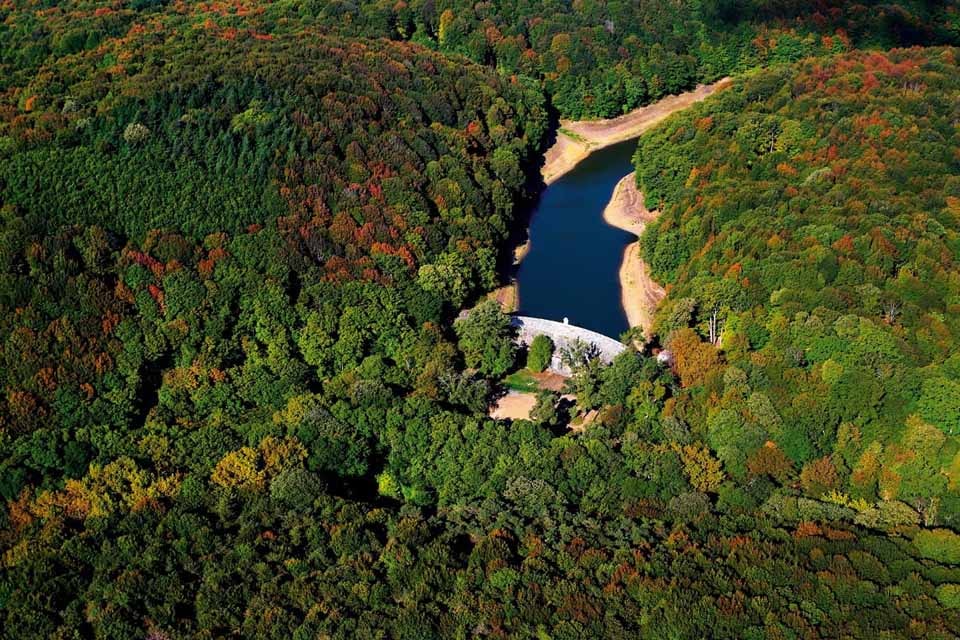
16. Belgrad Forest, Istanbul
Belgrad Forest is one of Istanbul’s most important natural attractions and among the city’s most beautiful green spaces. It is a favorite destination for nature lovers, local residents, and international visitors seeking a peaceful escape from the busy streets of Istanbul. Located about 15 kilometers northwest of the city center, the forest serves as a natural sanctuary and is easily accessible, with renting a car being one of the most convenient ways to visit.
The forest is home to an impressive variety of plant and animal species, making it one of the region’s most significant biodiversity reserves. Its lush, humid landscape is covered with mosses and diverse vegetation, creating a unique ecosystem. As you walk along its scenic trails, you will encounter untouched natural landscapes, dense woodlands, and breathtaking views. Flowing rivers, charming waterfalls, and tranquil lakes are scattered throughout the forest, providing perfect spots for photography and relaxation.
Belgrad Forest is also a popular destination for outdoor recreation. Visitors can enjoy hiking, jogging, camping, picnicking, and a variety of other outdoor activities. Wildlife enthusiasts may spot colorful birds, insects, and many native animal species while exploring the area. Away from the noise of the city, the forest offers a calm and peaceful atmosphere, making it an ideal place for meditation, yoga, and simply reconnecting with nature.
The forest also has great historical importance. During the reign of Sultan Selim, Belgrad Forest held a strategic position because it served as one of Istanbul's primary water sources. Before reaching the forest, visitors can still see the historic aqueducts that once carried fresh water to different parts of the city.
Water from the forest's springs and streams was transported into Istanbul through an extensive network of channels. As the city's population grew and demand for water increased, large reservoirs and dams were constructed within the forest. Today, Istanbul's water supply continues to rely on several historic and modern reservoirs located in and around the Belgrad Forest region.
From the 16th to the 20th century, the forest remained under protected status, allowing its ecosystem to flourish. Deciduous oak trees make up the largest portion of the forest, followed by Oriental beech, hornbeam, and Anatolian chestnut trees. The forest is also home to more than 71 species of birds and 18 species of mammals, making it one of the richest natural habitats near Istanbul.
Whether you visit during the cool days of summer or the colorful season of autumn, Belgrad Forest offers an unforgettable experience with its pristine landscapes, fresh air, and peaceful atmosphere.
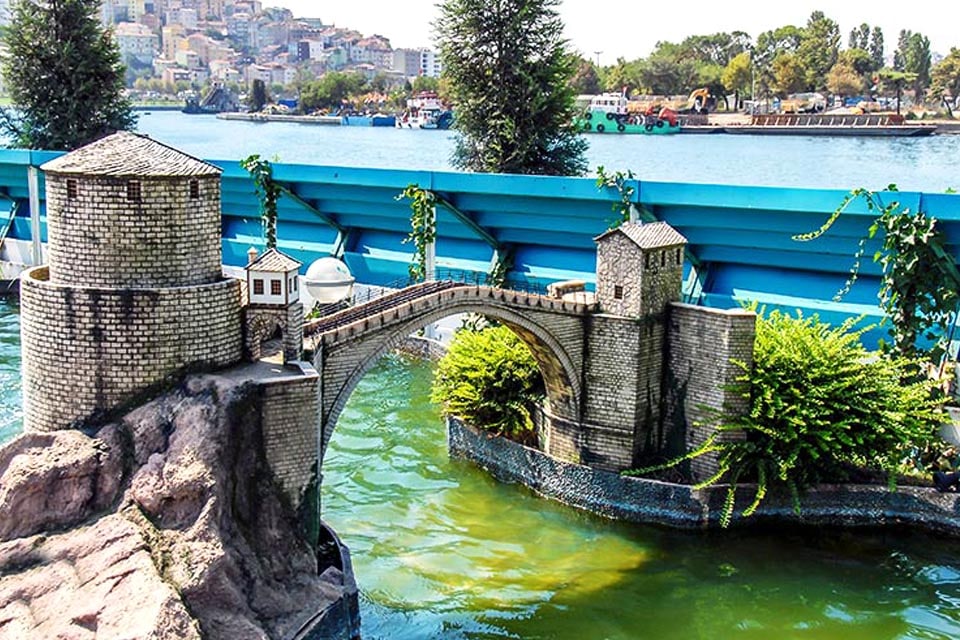
17. Miniatürk Park, Istanbul
Miniatürk Park is one of Istanbul’s most unique tourist attractions and a fascinating destination for visitors of all ages. Turkey is one of the world’s most popular travel destinations, renowned for its rich history, cultural heritage, and countless landmarks. From magnificent mosques and royal palaces to the ancient stone city of Mardin, the iconic Hagia Sophia, the fairy chimneys of Cappadocia, colorful historic streets, and beautifully preserved Ottoman architecture, the country offers an incredible variety of attractions. Exploring all of these sites, however, requires considerable time and travel. Miniatürk provides a remarkable opportunity to experience many of Turkey’s most famous landmarks in a single location.
Opened in 2003, Miniatürk is one of the largest miniature parks in the world. It features meticulously crafted scale models of Turkey’s most famous historical monuments, architectural masterpieces, and cultural landmarks. Visitors can walk among these detailed replicas and admire the remarkable craftsmanship while learning about the country's rich history and architectural heritage.
The park covers approximately 60,000 square meters. Around 15,000 square meters are dedicated to the miniature models, 40,000 square meters consist of landscaped gardens and open green spaces, 3,000 square meters are occupied by indoor facilities, and the remaining area includes pools and parking facilities.
Miniatürk showcases 128 miniature models representing some of Turkey's most important landmarks. Among them, 59 replicas feature famous attractions in Istanbul, while the rest represent significant historical and cultural sites from across the country. In addition to its impressive collection of miniature monuments, the park also offers a variety of recreational facilities, cafés, souvenir shops, and family-friendly attractions, making it an enjoyable destination for visitors of all ages.
The main purpose of Miniatürk is to introduce visitors to Turkey's rich cultural heritage and architectural treasures in an educational and entertaining way. By bringing together miniature versions of the country's most iconic landmarks, the park allows visitors to experience the diversity of Turkey without traveling long distances. It is an ideal destination for families, history enthusiasts, photographers, and anyone wishing to gain a deeper appreciation of the country's remarkable past.
Today, Miniatürk is one of Istanbul's most popular tourist attractions, welcoming thousands of visitors from around the world each year who come to admire its extraordinary collection of miniature masterpieces.
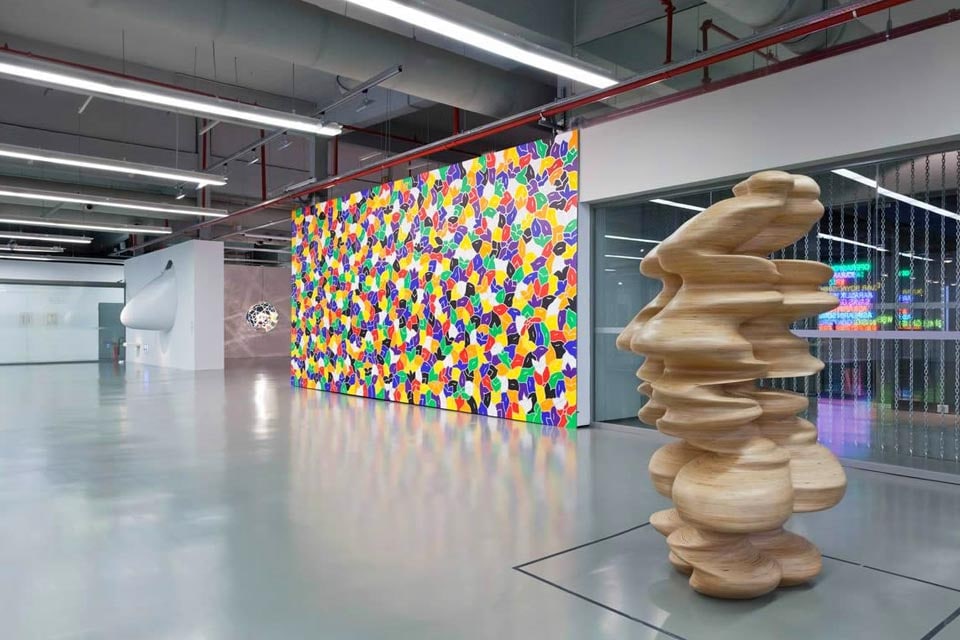
18. Istanbul Museum of Modern Art
The Istanbul Museum of Modern Art, officially known as Istanbul Modern, is one of Turkey’s leading cultural institutions and one of the city’s most remarkable attractions for art lovers. As Turkey’s first museum dedicated to modern and contemporary art, it has played a significant role in promoting Turkish art on both the national and international stage since its opening in 2004.
The museum presents an outstanding collection of modern and contemporary works by both Turkish and international artists. Its permanent and temporary exhibitions feature thousands of artworks from the 20th and 21st centuries, including paintings, sculptures, photography, multimedia installations, video art, light installations, and other forms of contemporary artistic expression. These exhibitions offer visitors an inspiring journey through the evolution of modern art while showcasing the creativity of artists from around the world.
Located in one of Istanbul’s most scenic waterfront districts, close to several of the city's historic landmarks, the museum is itself an architectural masterpiece. Its elegant contemporary design creates a bright and welcoming environment that perfectly complements the artworks displayed inside.
Beyond its exhibitions, Istanbul Modern serves as an important educational and cultural center. Throughout the year, the museum organizes workshops, seminars, artist talks, panel discussions, and a wide range of cultural events for visitors of all ages. These programs provide valuable opportunities for students, researchers, artists, and anyone interested in contemporary art to deepen their knowledge and engage with the artistic community.
The museum also houses one of Turkey's most important art libraries, containing more than 11,000 books and publications in Turkish and other languages. Through collaborations with artists, galleries, museums, and cultural institutions in Turkey and abroad, the library continues to expand its collection, making it a valuable resource for researchers and art enthusiasts.
Film screenings are another important part of Istanbul Modern's cultural program. In collaboration with Turkish and international filmmakers, the museum regularly presents independent films and special cinema events. It also partners with international film festivals and cultural organizations to showcase outstanding productions from around the world. Since screening schedules may change throughout the year, visitors are encouraged to check the museum's latest program before planning their visit.
In addition to its galleries, the museum features a stylish café overlooking the waterfront and a well-stocked museum shop where visitors can purchase art books, exhibition catalogues, design products, and unique souvenirs inspired by contemporary art.
Today, Istanbul Modern is recognized as one of Istanbul's premier cultural destinations. Whether you are an art enthusiast, a student, or simply curious about contemporary creativity, a visit to this remarkable museum offers an inspiring and unforgettable experience in the heart of one of the world's most historic cities.
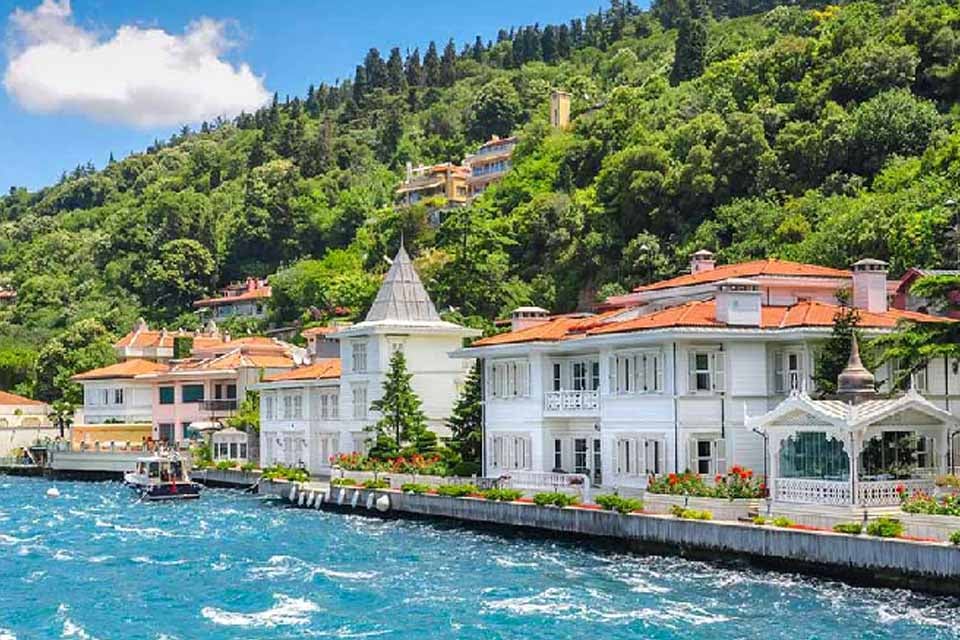
19. Büyükada Island, Istanbul
Büyükada Island is one of Istanbul’s most charming tourist destinations, located in the Sea of Marmara. Its name means "Big Island" in Turkish, and it is the largest of the famous Princes’ Islands, a picturesque archipelago just off the coast of Istanbul. Known for its peaceful atmosphere, historic landmarks, beautiful beaches, and lush landscapes, Büyükada offers visitors a refreshing escape from the fast pace of city life.
Covering an area of approximately five square kilometers, Büyükada is home to more than 7,000 residents. The island consists of two main hills: İsa (Manastır) Hill in the north and Yüce Hill in the south, both offering spectacular panoramic views of the Sea of Marmara and the Istanbul skyline.
Büyükada has a rich history that dates back to the Byzantine and Ottoman periods. Many of its elegant wooden mansions, historic villas, churches, monasteries, and public buildings reflect the island's multicultural heritage and architectural beauty. The first palace built on the island is believed to date back to the reign of Byzantine Emperor Justin II, highlighting Büyükada's long and fascinating past.
Among the island's most famous attractions are the Church and Monastery of Aya Yorgi (St. George), the Greek Orthodox Orphanage of Prinkipo, the Adalar (Büyükada) Museum, Hamidiye Mosque, St. Nicholas Church, and the island's beautiful pine forests, which provide peaceful walking trails and breathtaking viewpoints.
One of Büyükada's most distinctive features is its tranquil, car-free environment. With no regular motor vehicle traffic, the island offers a quiet and relaxing atmosphere where visitors can enjoy walking, cycling, or exploring its charming streets at a leisurely pace. This peaceful setting has made Büyükada and the other Princes' Islands some of the most popular day-trip destinations for both local residents and international tourists.
The island's natural beauty is at its finest during spring and summer, when colorful flowers bloom and the surrounding sea becomes ideal for swimming and sunbathing. Visitors can also enjoy photography, cycling, relaxing by the waterfront, or simply taking in the island's spectacular coastal scenery.
Büyükada is also an excellent place to experience local culture. Its traditional markets and small shops sell handmade crafts, local products, souvenirs, and regional specialties. The island's restaurants and cafés are particularly famous for serving fresh seafood alongside a wide variety of traditional Turkish dishes, making it a wonderful destination for food lovers.
Families especially enjoy visiting Büyükada thanks to its spacious parks, picnic areas, and open green spaces. Whether you are exploring its historic streets, admiring its elegant architecture, relaxing by the sea, or tasting authentic Turkish cuisine, Büyükada offers a memorable experience that combines history, nature, and island life in one unforgettable destination.
Overall, Büyükada is one of Istanbul's most enchanting attractions, offering visitors the perfect blend of history, culture, natural beauty, and relaxation just a short ferry ride from the city.
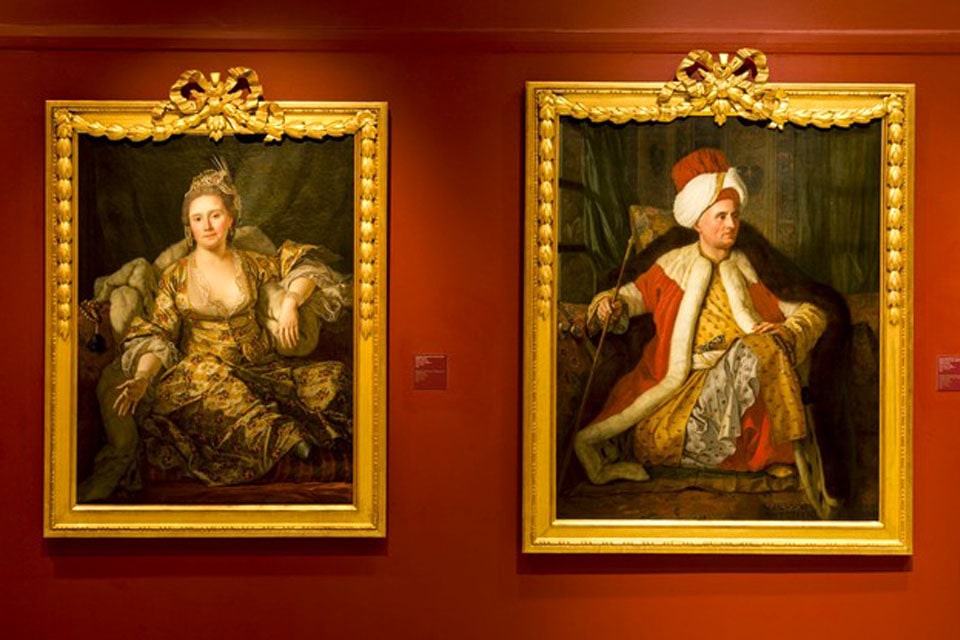
20. Pera Museum, Istanbul
One of the greatest rewards of traveling is discovering the culture, history, and artistic heritage of different countries. Turkey, with its rich historical legacy and remarkable cultural treasures, is one of the world's most fascinating destinations, and Istanbul stands at the heart of that experience. Among the city's outstanding cultural attractions, the Pera Museum is one of the most renowned museums and a must-visit destination for art and history enthusiasts.
The Pera Museum opened in 2005 in the historic Beyoğlu district, one of Istanbul's most vibrant and culturally rich neighborhoods. The museum is housed in a beautifully restored historic building that originally served as the Bristol Hotel. Between 2003 and 2005, the structure underwent an extensive renovation, transforming it into a modern museum while preserving its elegant architectural character.
The museum is best known for its exceptional collection of paintings by prominent Turkish and international artists. Today, it houses some of Turkey's finest art collections while also hosting temporary exhibitions, audiovisual events, educational workshops, lectures, and cultural programs throughout the year.
One of the museum's most celebrated collections is the Portraits of the Sultans, which offers visitors a fascinating journey through the history of the Ottoman Empire. These portraits, dating from the eighteenth century onward, reflect the long-standing artistic relationship between European and Ottoman painters. Throughout history, many Western artists were inspired by the culture and beauty of the East, and Istanbul—situated along the Bosphorus—became an important meeting point for artistic exchange between Europe and the Ottoman world.
Another highlight is the museum's renowned Orientalist Painting Collection, which features remarkable works depicting Ottoman society, the landscapes of Anatolia, and everyday life in Turkey. Created by both Turkish and European artists, these paintings provide valuable insight into the country's history, traditions, and cultural identity while showcasing the artistic fascination with the Ottoman Empire.
Visitors should also explore the museum's fascinating Parallel Worlds Collection, which includes portraits of influential patrons of the arts from the seventeenth to the nineteenth centuries. Many of these works were inspired by the accounts of European ambassadors and diplomats who visited the Ottoman Empire. Together, they offer a unique perspective on Ottoman society, cultural life, and diplomatic relations during this important period of history.
The museum's Istanbul Collection provides a captivating glimpse into the city's past when it served as the magnificent capital of the Ottoman Empire. Through paintings depicting daily life, bustling streets, iconic landmarks, and scenic waterfronts, visitors can experience how artists captured the spirit and beauty of historic Istanbul across different eras.
With its outstanding permanent collections, internationally acclaimed exhibitions, and engaging cultural programs, the Pera Museum is one of Istanbul's finest museums. It offers visitors an inspiring opportunity to explore Turkish art, Ottoman history, and the cultural connections between East and West, making it an unforgettable stop on any visit to the city.
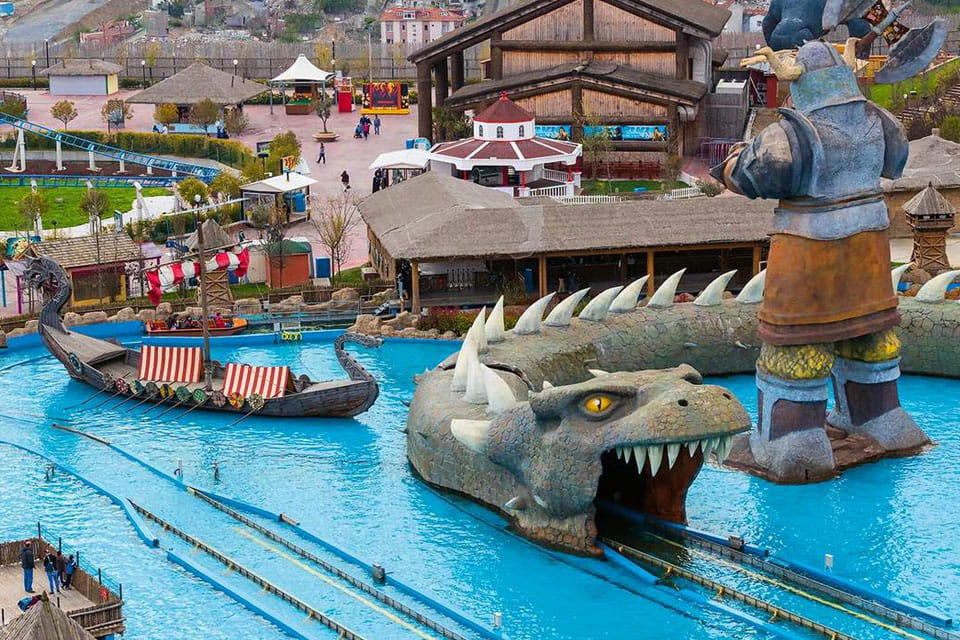
21- Vialand Theme Park and Water Park in Istanbul (Disneyland)
One of the most popular attractions in Istanbul is Vialand Theme Park, also known as Disneyland. The park gained international recognition in 2015, when it was named and recognized as the fifth-largest theme park in Europe. Vialand covers an area of approximately 200,000 square meters and offers a wide variety of exciting, entertaining, and thrilling rides and activities. Vialand was formerly also known as Isfanbul.
Vialand has been listed among the top 10 theme parks in the world and received the European Star Award in 2016, ranking among 800 theme parks worldwide.
The theme park is divided into three main sections: Playland, Legends World, and Adventure & Thrill World. Each section offers a variety of exciting and entertaining rides and activities.
Justice Tower, Wild River, Safari, Tunnel, Jet Ski, Viking Slide, Conqueror’s Dream, Little Traveler, Magic Room, Breath-Taking Roller Coaster, Little Miner Train, 360° Spin, Swing Palace, Adventure Train, Ferris Wheel, and High-Speed Train are just some of the exciting attractions at Vialand. Below, we introduce some of the most popular rides and activities at Vialand.
Once Upon a Time in Istanbul
Once Upon a Time in Istanbul is one of the most interesting attractions at Vialand. With its towers and walls, this attraction resembles Topkapi Palace from a distance. It is one of the best attractions for history enthusiasts, offering visitors a glimpse into old Istanbul.
At Once Upon a Time in Istanbul, you can see a general view of the city, including its streets, shops, and houses, all designed to recreate the traditional and historic atmosphere of Istanbul.
Justice Tower at Vialand
One of the most exciting attractions at Vialand is the Justice Tower. All you need to do is sit in your seat and fasten your safety belt. Then, get ready for an exciting flight high above the ground.
This thrilling ride takes you rapidly up to a height of 50 meters, where you can enjoy spectacular views of the city. The ride has height restrictions.
Vialand Wild River
Another exciting attraction at Vialand Theme Park is the Wild River. This thrilling ride allows you to experience powerful waves and enjoy an unforgettable adrenaline rush.
You can ride together with your family or friends in a boat as you travel along a fast-flowing river and pass through waterfalls. The river ride is approximately 700 meters long.
Vialand Roller Coaster
One of the most popular attractions at Vialand is its roller coaster. This ride reaches an incredible speed of 110 km/h in just three seconds.
Like the Justice Tower, the roller coaster has age and height restrictions. Visitors generally need to be around 150 cm tall to ride. The Vialand roller coaster has a unique star-like design and is operated using a central mechanism.
Almost all visitors consider this roller coaster to be one of the most thrilling attractions in Vialand. Therefore, you should be physically prepared for the excitement and adrenaline rush before experiencing this ride.
Viking Slide
As its name suggests, the Viking Slide is another extremely exciting attraction. This thrilling ride takes you on a dramatic and fast descent, making it one of the most popular activities at Vialand.
The Viking Slide also has age and height restrictions and is particularly recommended for adults looking for an exciting experience.
Little Traveler Tunnel
The Little Traveler Tunnel is another popular attraction at Vialand. This colorful and entertaining tunnel is designed especially for children.
Children can explore the tunnel while learning about the traditions and cultures of different countries. The tunnel is approximately 160 meters long and is considered one of the international-themed areas of Vialand, introducing children to different countries, languages, and cultures.
Vialand Istanbul has been designed according to the latest international standards. A large shopping complex is also located next to the park, allowing parents to enjoy shopping or take a relaxing walk while their children have fun.
There is also an information and assistance desk where visitors can receive detailed information about the park and learn about the age and height restrictions for each attraction. At the information desk, you can also get a map of the entire park and ask about Wi-Fi services, allowing you to stay connected throughout your visit.
Finally, since Vialand is a large complex, you can use the Vialand amusement park train and other transportation services to move around the park without worrying about getting tired.
A visit to Vialand in Turkey is a perfect combination of excitement, fun, adventure, and unforgettable memories.

22- LEGOLAND Istanbul
LEGOLAND Istanbul is one of the popular attractions in Istanbul and one of the best entertainment destinations for children. Immersing yourself in the exciting and colorful world of LEGO can be fascinating and enjoyable for both children and adults.
LEGOLAND is an ideal place for entertainment, imagination, creativity, and fun. In this magical world, children’s ideas and dreams can come to life. From riding royal carriages and building space rockets to watching 4D movies, there are countless exciting activities to enjoy. However, LEGOLAND is not only about entertainment. Learning through play and education are also among its main goals.
LEGOLAND Istanbul opened in 2015. The attractions and activities at LEGOLAND Istanbul are mainly designed for children between 3 and 10 years old. The complex features 15 different play areas and offers a wide variety of recreational activities. Children can even become part of a LEGO-built city and take part in its construction.
MINILAND is one of the areas that attracts children the most. In this section, famous landmarks from around the world, as well as well-known Turkish landmarks such as Hagia Sophia, are recreated entirely with LEGO bricks. Visitors can also see LEGO versions of the Sultan Ahmed Mosque (Blue Mosque) and Galata Tower. This section has been built with more than one million LEGO bricks. Children are often amazed to see miniature versions of buildings they may have previously seen in real life, and the experience can be fascinating for adults as well.
The 4D Cinema is another exciting part of LEGOLAND. Visitors can enjoy animated movies inspired by the LEGO world in a unique 4D experience.
The LEGO Workshop is another fun and educational activity where children learn, with the help of instructors, how to design and build whatever they imagine using LEGO bricks. Children can explain their ideas and then bring them to life with the help of the instructors.
Laser Battle and the laser-gun play area are also among the most exciting attractions at LEGOLAND and are very popular with children. During this game, children use laser guns to target the opposing team and try to rescue a beautiful princess. Parents can also join and help their children during the game. By defeating skeletons and other creatures, children earn points and eventually have the chance to rescue the princess.
At Olivia’s House, children can meet LEGO-themed characters such as Emma, Olivia, Andrea, and Stephanie. They can also sing songs on a LEGO-themed stage using the karaoke machine.
Another fascinating section of LEGOLAND Istanbul is DUPLO Village. DUPLO is LEGO’s range of large-sized building blocks. Because the bricks in DUPLO Village are much larger, this area is especially suitable for children under three years old. The large LEGO pieces are designed to be safe for young children, allowing them to play comfortably and freely.
In the Merlin section, children can sit inside a cabin and pedal. The harder they pedal, the higher the cabin rises. Reaching the top and looking down at the adults below can be an exciting experience for children.
The LEGO Build & Test workshop is another popular attraction where children can build their favorite LEGO cars and test them on the spot. They can race their creations along a special sloped track designed for toy cars.
One of the unique features of LEGOLAND Istanbul is its special play area for children under three years old. There are no small LEGO pieces in this area, making it a safer and more comfortable environment where young children can play freely.
Before you visit, keep in mind that adults cannot enter LEGOLAND Istanbul on their own. At least one child must accompany them.
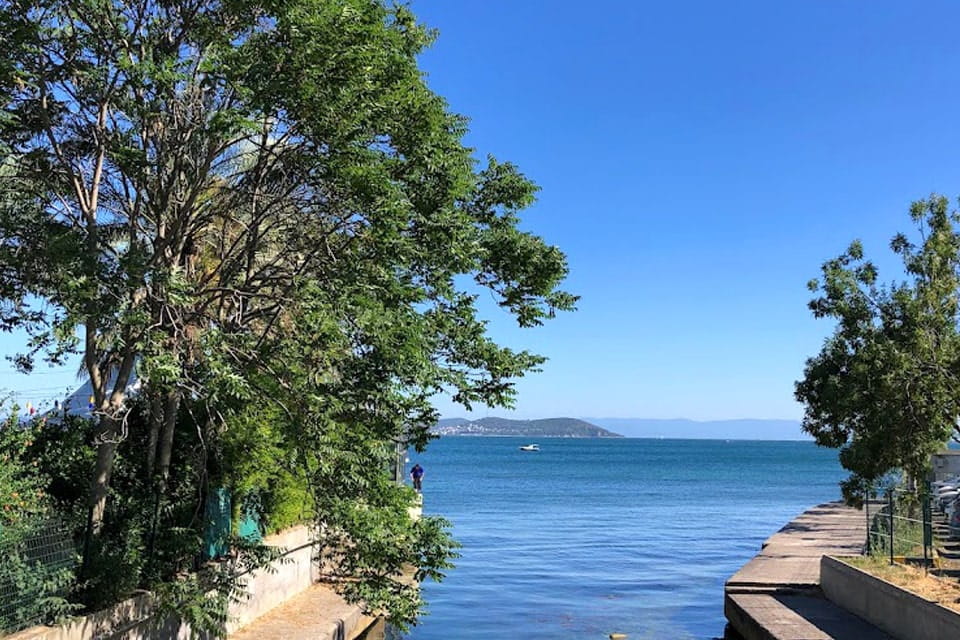
23- Fenerbahçe Park in Istanbul
One of the popular attractions in Istanbul is Fenerbahçe Park, one of the city’s largest and most beautiful parks. It is located in the Kadıköy district, right next to the Sea of Marmara. The park is very popular among Istanbul residents and is a favorite place for relaxing and spending time outdoors.
With beautiful views of the Princes’ Islands and Sarayburnu, along with its seaside cafés, Fenerbahçe Park is one of the best recreational spots in Kadıköy. It is an ideal and pleasant place for family picnics and gatherings with friends. The scenery around the park and the nearby green spaces is particularly beautiful.
Fenerbahçe Park is famous for its beautiful views of the Sea of Marmara. Especially around sunset, visitors can enjoy breathtaking views as the sun sets over the blue waters. The park offers a variety of facilities and activities, including a football field, cycling paths, a seaside promenade, a children’s playground, and seaside cafés and restaurants.
Fenerbahçe Park is also a wonderful place for romantic dates and meeting friends. Children can enjoy plenty of space for playing and having fun. Cycling, playing football, or enjoying food and drinks at the seaside cafés and restaurants can create memorable and relaxing moments.
The park is especially green and beautiful during spring and summer, while autumn and winter also give it their own unique charm. The walking paths throughout the park are peaceful, scenic, and almost dreamlike. This Istanbul attraction looks like a lush green peninsula surrounded by the Sea of Marmara, making it a beautiful and memorable place to visit.
Two other important attractions in Istanbul are located near Fenerbahçe Park: the Istanbul Toy Museum and the Barış Manço Museum, the former home of one of Turkey’s most famous cultural figures.
Barış Manço was a beloved Turkish television personality and rock musician, and his former home is just as fascinating and unique as his personality. Today, his house has been transformed into an interesting and attractive museum that welcomes many visitors.
Both museums are located relatively close to each other, and you can easily visit them both with just a short walk between the two.
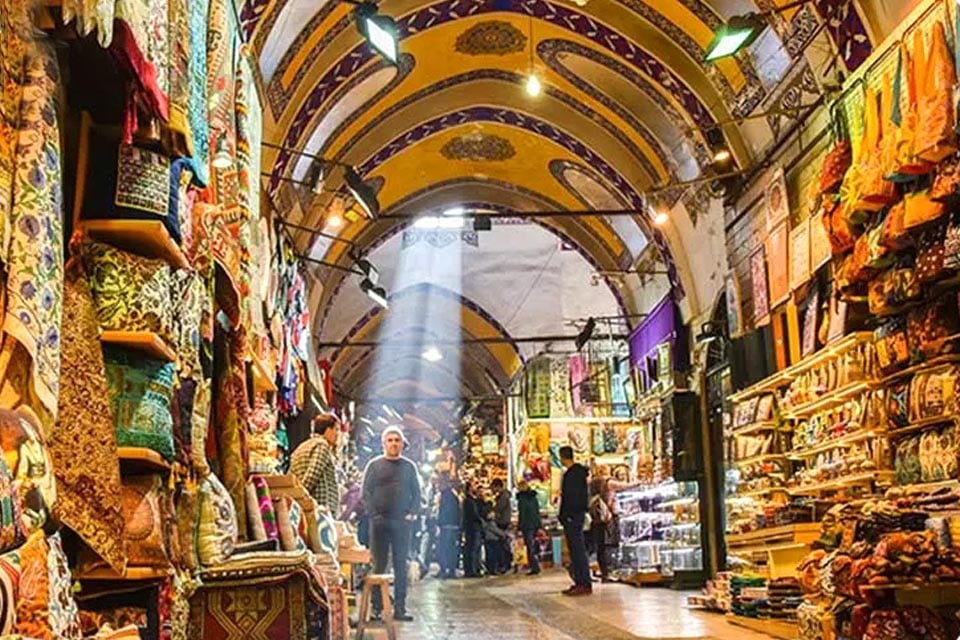
24- Grand Bazaar in Istanbul
The Grand Bazaar in Istanbul is one of the city’s most famous attractions, visited by millions of tourists from around the world every year. It is also one of the largest covered markets in the world and one of Turkey’s most important tourist attractions. Known in Turkish as “Kapalıçarşı,” the Grand Bazaar is located in the heart of Istanbul and has a long and fascinating history.
The Grand Bazaar was established in the 15th century and has been operating ever since. It is considered one of the world’s most historic and famous markets.
Sultan Mehmed II built the market in 1455–1456, shortly after the conquest of Istanbul. In its early days, the market mainly traded textiles and was known as the Jewellers’ Bedesten. The Grand Bazaar was built using brick and wood, with large arched ceilings and beautifully decorated brick and stone walls.
The Grand Bazaar is enormous and contains more than 4,000 shops and stores. It is located in the center of Istanbul, close to Hagia Sophia and the Sultan Ahmed Mosque (Blue Mosque).
At the Grand Bazaar, you can find a wide variety of interesting and traditional products, including handwoven carpets, jewelry, traditional clothing, leather goods, pottery and ceramics, tea and coffee, toys, and many other items. Shopping at the Grand Bazaar is much more than simply buying products; it is a unique historical and cultural experience.
It is also an excellent place to buy Turkish souvenirs and gifts. Knowing how to negotiate with shopkeepers can be very useful when shopping here.
Near the Grand Bazaar, you can also visit several other important historical attractions, including Hagia Sophia, the Sultan Ahmed Mosque, and Topkapi Palace.
There are also many restaurants and cafés around the Grand Bazaar where you can enjoy delicious Turkish food and drinks after exploring the market. The local restaurants and cafés in this area are plentiful and diverse.
Inside the Grand Bazaar, there is also a dedicated jewelry market, where visitors can find valuable jewelry and precious items.
The Grand Bazaar is an unforgettable experience for tourists and travelers and is one of the places you should definitely visit during a trip to Istanbul. With its rich history, unique architecture, and vibrant atmosphere, this historic market remains an important commercial and cultural center and is truly one of Istanbul’s hidden gems worth exploring.
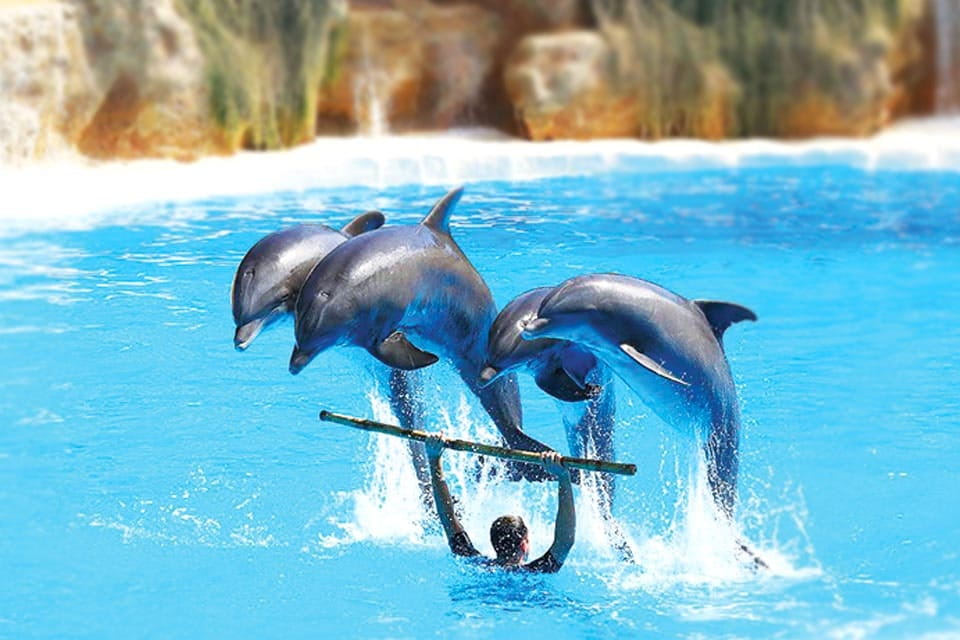
2۵-Istanbul Dolphinarium
Istanbul Dolphinarium is one of the most popular attractions in Istanbul and one of the largest dolphin parks in Europe. This tourist attraction is especially popular among families.
Istanbul Dolphinarium is a prominent entertainment and educational center in Istanbul and is known as one of the city’s popular tourist destinations. This recreational and educational complex focuses on marine animals, particularly dolphins, as well as their care, training, and interaction with marine life.
Istanbul Dolphinarium has large pools where dolphin and other marine animal shows are held. These shows feature the dolphins’ impressive acrobatic movements and intelligence, providing an entertaining experience for visitors. Guests can enjoy watching dolphin performances and discovering marine mammals such as dolphins, playful seals, large sea lions, and white whales, while spending an enjoyable time at the dolphinarium.
At the dolphinarium, visitors can swim with dolphins, dive, or experience dolphin therapy. Dolphin shows last approximately one hour. Taking photos with the dolphins is also one of the most exciting activities at the dolphinarium.
Visitors who wish to swim with the dolphins must be able to swim independently, as the pool is five meters deep. There are no safety aids such as life jackets or swimming rings, and no lifeguards are available in the pool.
Interestingly, Istanbul Dolphinarium is also known as an educational center. Educational programs about marine life and environmental protection are offered here, providing valuable information and learning opportunities for children and anyone interested in marine animals.
The dolphinarium also offers several recreational facilities for families and visitors, including restaurants, cafés, shops, and play areas.
Istanbul Dolphinarium pays special attention to environmental protection and marine life conservation. It also organizes educational programs to raise awareness about protecting the seas and the importance of marine ecosystems.
Istanbul Dolphinarium is an attractive destination for family entertainment and education in Istanbul. It is a great place to learn about the underwater world and discover the importance of protecting marine life.
This fascinating attraction is located in the Eyüp area, near the Golden Horn in Istanbul. Visitors can easily reach the dolphinarium by rental car or public transportation.